
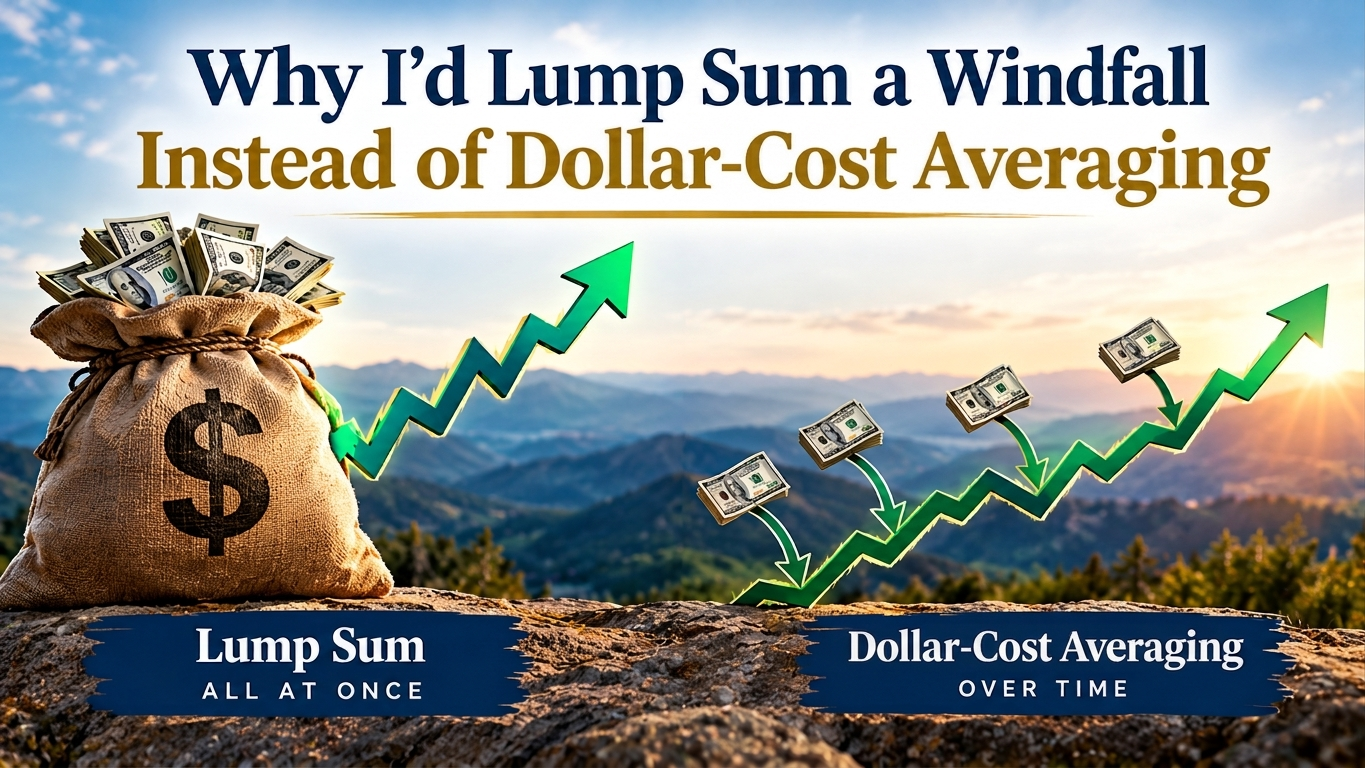
When a large sum of money lands in your lap, you face a choice: invest it all at once (lump sum), or spread it into the market over time (dollar-cost averaging, or DCA). If I received a true windfall, I would invest it as a lump sum.
Tag Archives: ETFs
Time Beats Amount: Why Starting Early Matters More Than Investing More
If you could control only one variable in your investing life, which would matter more: how much you invest, or how long you invest? Most people instinctively say amount. The math says otherwise. And the good news is that it means you do not need a high income or a big lump sum to buildContinue reading “Time Beats Amount: Why Starting Early Matters More Than Investing More”
My Investment Policy Statement
An investment policy statement is a short written plan that defines how you will invest and, just as importantly, how you will behave when markets get frightening or exciting. Writing one down in advance is valuable because it turns your strategy into rules you can follow when emotions would otherwise push you toward costly decisions.Continue reading “My Investment Policy Statement”
Share the Fruits of Capitalism

I want to make a case for something that used to be considered common sense: capitalism is the greatest economic system ever devised by human beings. Not perfect — nothing is — but the most effective wealth-creating, poverty-reducing, standard-of-living-improving engine in the history of civilization. And more importantly, I want to make the case thatContinue reading “Share the Fruits of Capitalism”
Robinhood: Six Months of the Good and the Bad

I’ve been a Fidelity customer since 2012, housing every investment account I owned there. In 2022, I even started putting every purchase on the Fidelity Visa Signature Rewards Card. Fully immersed in the Fidelity ecosystem, I never looked elsewhere. Then Robinhood started showing up everywhere. So in April 2025, I opened an account, just toContinue reading “Robinhood: Six Months of the Good and the Bad”
My All-American Portfolio

I’ve previously laid out the case for and against holding international exposure. Both sides have real merit. But I didn’t tell you what I actually do with my own money. Here it is: I hold zero international stocks. My retirement accounts and my taxable brokerage are all VTI, all the time. No VXUS, no VEA,Continue reading “My All-American Portfolio”
The Race to Zero: How the Cost of Investing Went from Robbery to Free

For most of the twentieth century, investing in the stock market wasn’t just risky — it was expensive. Not in the “markets go up and down” kind of way. Expensive in the “you’re paying a toll just to play” kind of way. Commissions, sales loads, management fees — the financial industry had built a remarkablyContinue reading “The Race to Zero: How the Cost of Investing Went from Robbery to Free”
Dividend Irrelevance, Revisited

The Modigliani-Miller Dividend Irrelevance Theorem is one of those ideas that every finance student encounters and most never fully reconcile with how markets actually behave. The theorem holds that, under a set of idealized assumptions, a company’s dividend policy has no effect on its value or on shareholder wealth. Whether a company pays out itsContinue reading “Dividend Irrelevance, Revisited”
The Psychology of a Losing Position
Every investor eventually holds a losing position. Whether it’s a stock that has dropped 10% or 40%, the experience is remarkably consistent: it feels different from a paper loss on an index fund you’ve held for a decade. Individual positions come with a story—a reason you bought, a price you paid, an expectation you formed.Continue reading “The Psychology of a Losing Position”
Roughly Efficient Markets
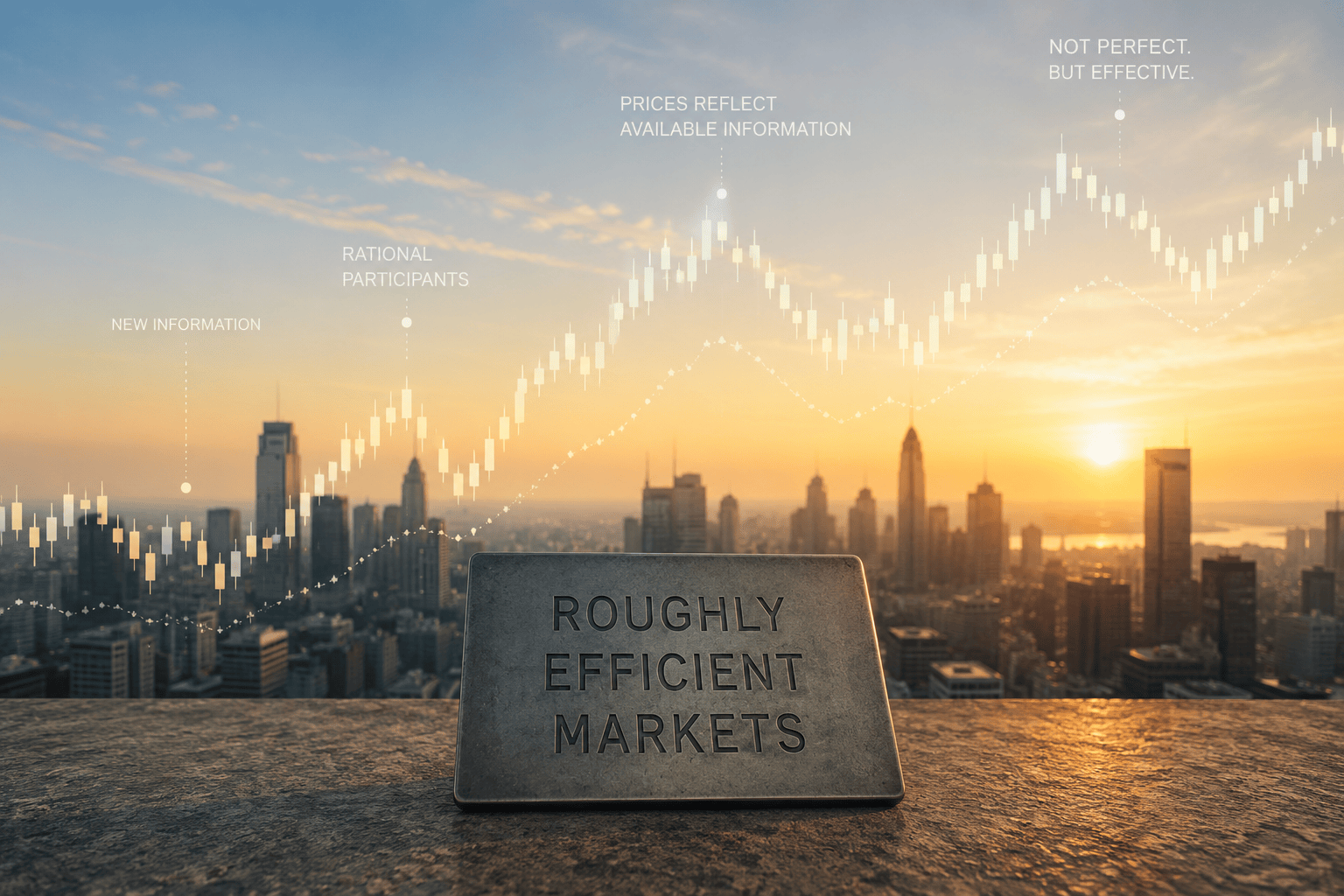
The Efficient Market Hypothesis (EMH) is a foundational concept in finance and is widely taught in academia. At its core, EMH holds that security prices rapidly incorporate all publicly available information, making it extremely difficult for investors to consistently achieve above-average returns. I believe this framework is largely correct but often taken too far. Below,Continue reading “Roughly Efficient Markets”

